

Diablo II: Resurrected
Suggested Page Title: Diablo II: Resurrected | The Dark Rebirth of a Timeless Classic
(Image Suggestions: Use a high-definition wallpaper of the Dark Wanderer or Andariel at the top, and insert a screenshot of the seven-class lineup or a runeword item in the middle.)
Introduction
In the history of action role-playing games, Diablo II is a monument that cannot be ignored. Diablo II: Resurrected is the high-definition projection of that monument onto modern hardware. It not only preserves the original’s captivating dark aesthetic and hardcore mechanics but also, through 4K graphics and modern platform features, allows both new and veteran players to step back into the perilous lands of Sanctuary.
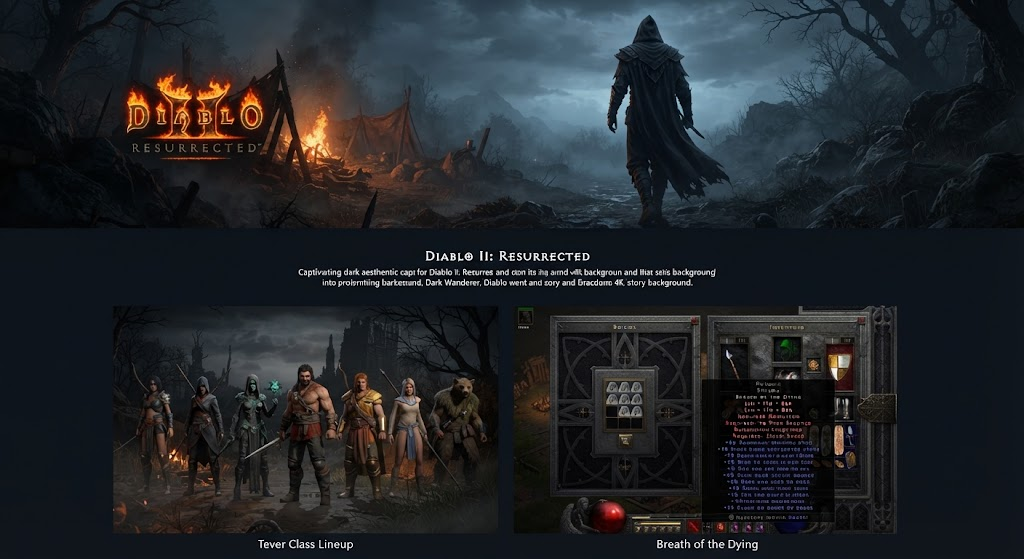
Story Background: Chasing the Dark Wanderer
The story of Resurrected picks up immediately after the ending of the original Diablo. After the demon in Tristram was defeated, a mysterious “Dark Wanderer” embarked on a journey eastward. The heroes players control must follow in his footsteps, traversing deserts, jungles, and frozen highlands, ultimately unraveling the mystery of the resurgence of the three Prime Evils—Diablo, Mephisto, and Baal.
The entire story spans five distinct acts, from the wilderness of the Rogue Encampment to the ancient temples of Kurast, and up to the freezing peaks of Mount Arreat. Each act features a completely different visual theme and monster ecosystem, a chapter-based progression structure that many similar titles still emulate today.
Core Gameplay: Class Building and Itemization
The game offers seven distinct classes: Amazon, Assassin, Barbarian, Druid, Necromancer, Paladin, and Sorceress. Each class boasts immense depth in playstyle; for example, the Assassin can choose radically different paths between martial arts and trap-laying, while the Druid can freely shift between Werewolf and Werebear forms and nature-based elemental summons. This freedom of build, determined by both the skill tree and attribute points, is the very soul of Diablo II‘s enduring appeal.
The equipment system is another core pillar. From common white items to rare unique gear, and further to “Runewords” formed by specific rune combinations, the game constructs a tiered and highly aspirational loot system. Players will face harsher death penalties in Nightmare and Hell difficulties, but it is only there that they can access those top-tier affixes and set items capable of changing a character’s fate.
The Significance of the Remaster: Balancing Classic and Convenience
Resurrected retains the original’s data and feel while adding convenience improvements such as a shared stash, auto-pickup for gold, and cross-platform progression. For veteran players, this is a nostalgia trip without compromise; for newcomers, it is the best entry point to understand the roots of the Diablo series. It proves that excellent game design does not fade with age—it only shines brighter with clear presentation.